Lee-Enfield and M1917: a buyer's guide
The Lee-Enfield served the British Army and the Commonwealth from the 1890s into the 1950s, and in reserve and police roles long after. Its rear-locking bolt and ten-round magazine let a trained soldier fire faster than with any other bolt action of its day. It fires .303 British, a rimmed cartridge. This guide covers the main models, the American-made rifles, and the M1917, the American Enfield that shares the name but not the action.
SMLE: the No. 1 Mk III
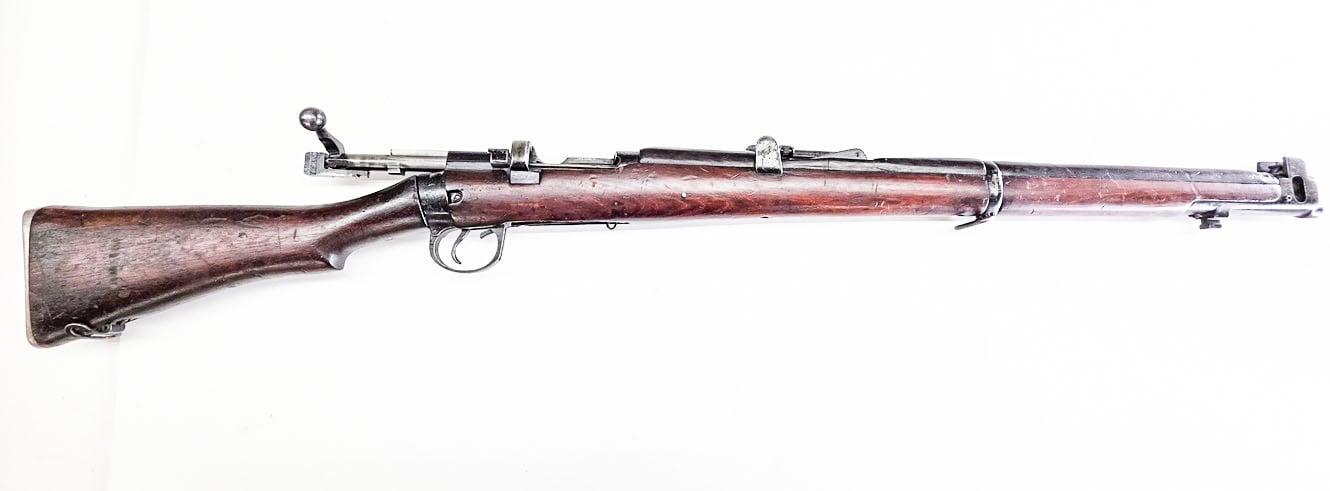
The Short Magazine Lee-Enfield, later called the Rifle No. 1, was the British rifle of the First World War. The Mk III and the simplified Mk III*, with its magazine cut-off and volley sights removed, were made in huge numbers in Britain, Australia (Lithgow) and India (Ishapore). The nose cap, with the bayonet boss under the muzzle, is the easy way to spot one. Dates and makers are stamped on the wrist socket.
The No. 4 Mk I
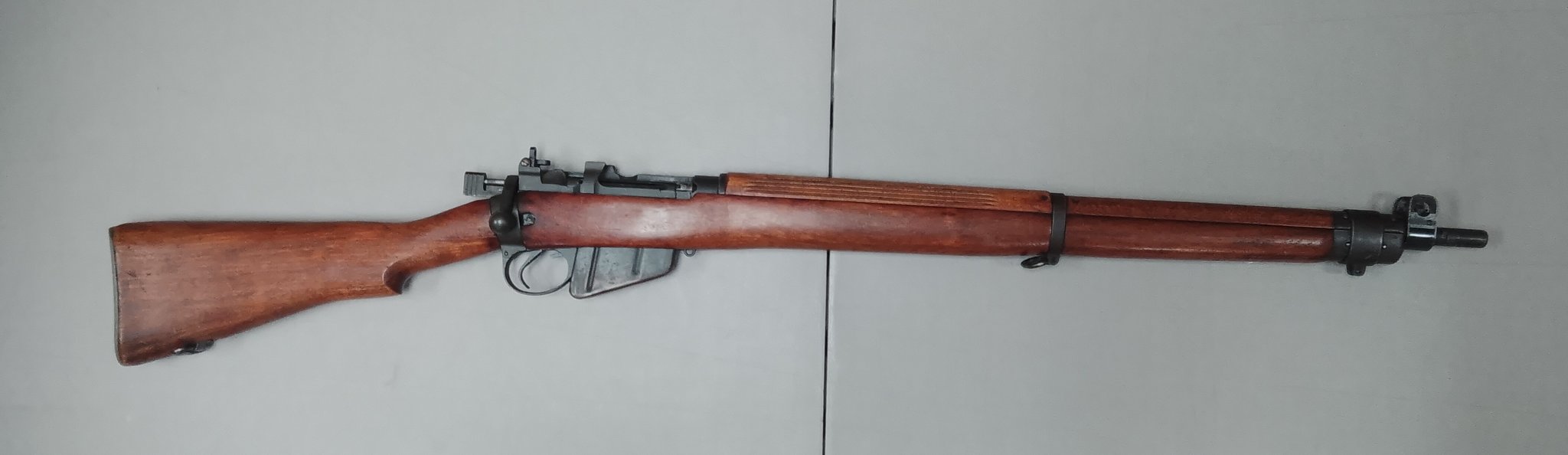
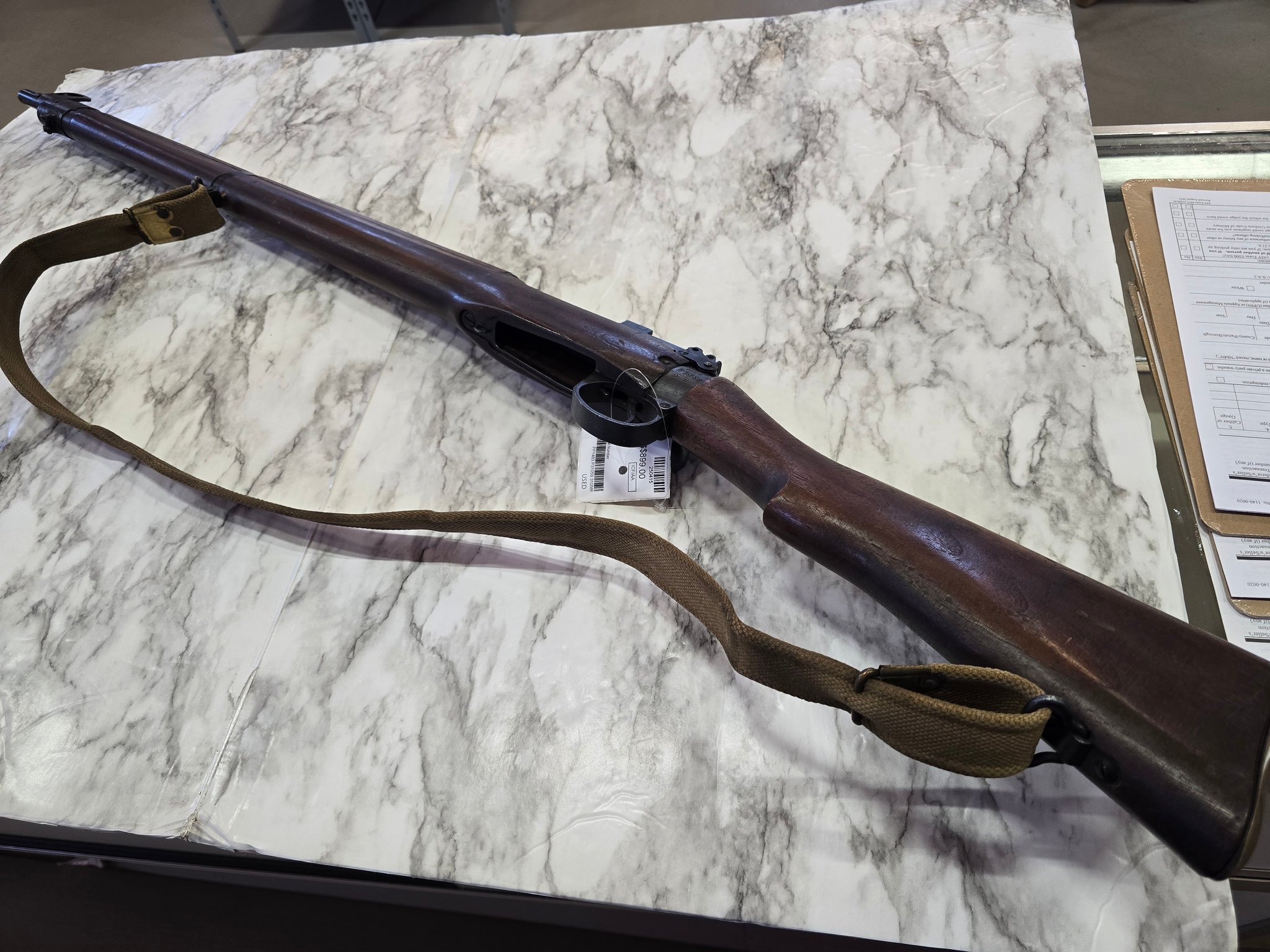
The No. 4 was adopted for the Second World War. It has a heavier barrel that sticks out past the forend, an aperture rear sight on the receiver and simpler machining. Many were made outside Britain:
- Savage. Savage Arms in Chicopee Falls, Massachusetts made No. 4 Mk I and Mk I* rifles under the Lend-Lease program, marked U.S. PROPERTY on the left side of the receiver. They are common and well made.
- Long Branch. The Long Branch arsenal in Canada made No. 4s, marked with its name and date.
- British factories. Royal Ordnance Factories at Fazakerley and Maltby and BSA at Shirley, among others, marked with letter codes on many rifles.
The No. 5 jungle carbine
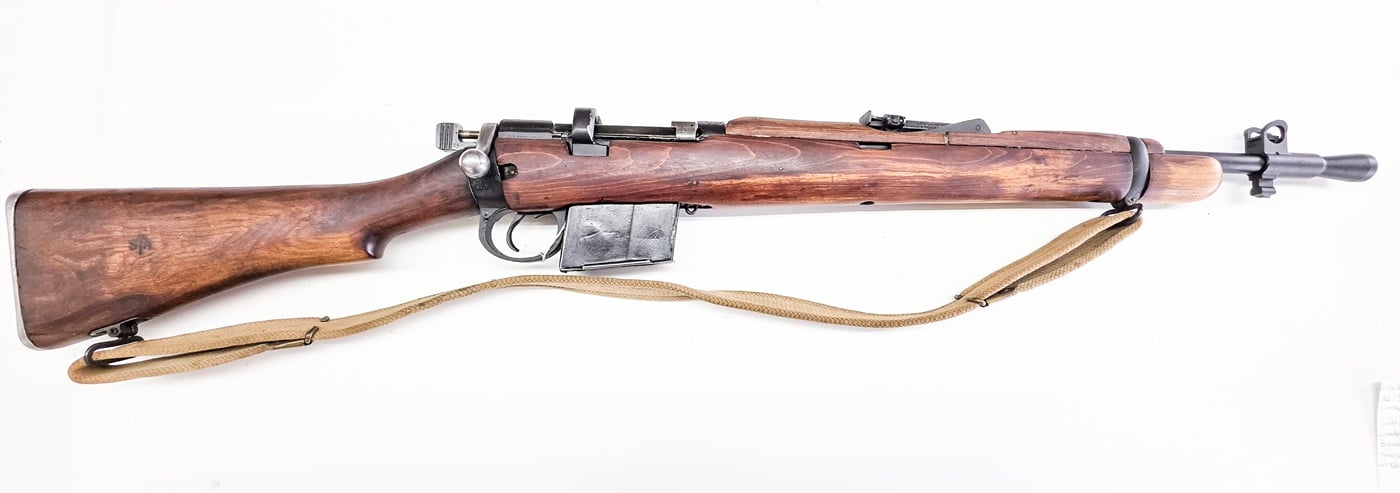
The No. 5 Mk I was a short, light carbine with a flash hider and a rubber butt pad, made from 1944 into 1947. It kicks hard and has a reputation for a wandering zero. Original No. 5s are collected; many look-alikes were made later by cutting down No. 4s, so check the receiver marking for No. 5 Mk I before paying a No. 5 price.
Ishapore and 7.62 NATO rifles
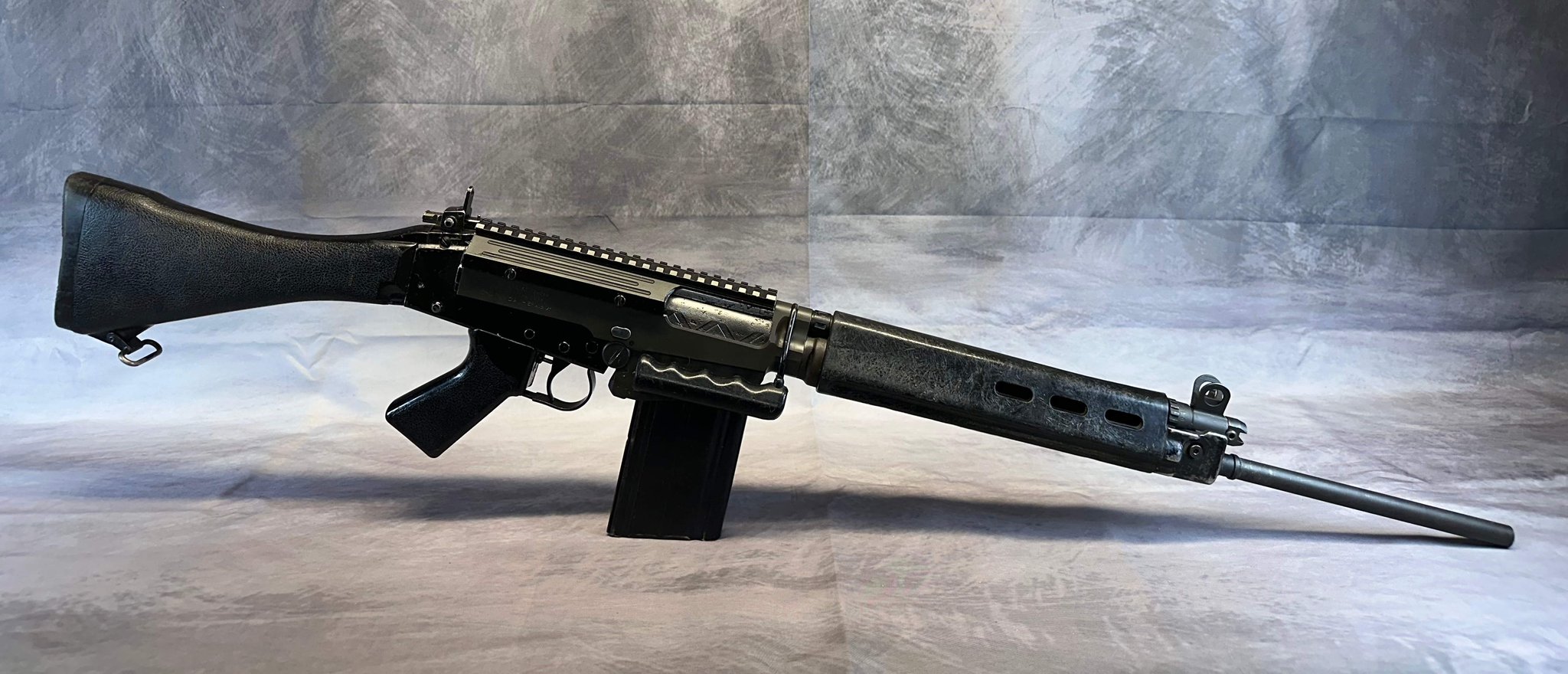
The Ishapore arsenal in India made SMLEs for decades and later the 2A and 2A1 rifles in 7.62x51mm NATO. These are factory 7.62 rifles with a stronger steel; they are not .303 rifles rechambered. Other conversions of .303 rifles to .308 exist; never assume a converted rifle is safe with full-power ammunition, and have a gunsmith inspect it.
The M1917 Enfield
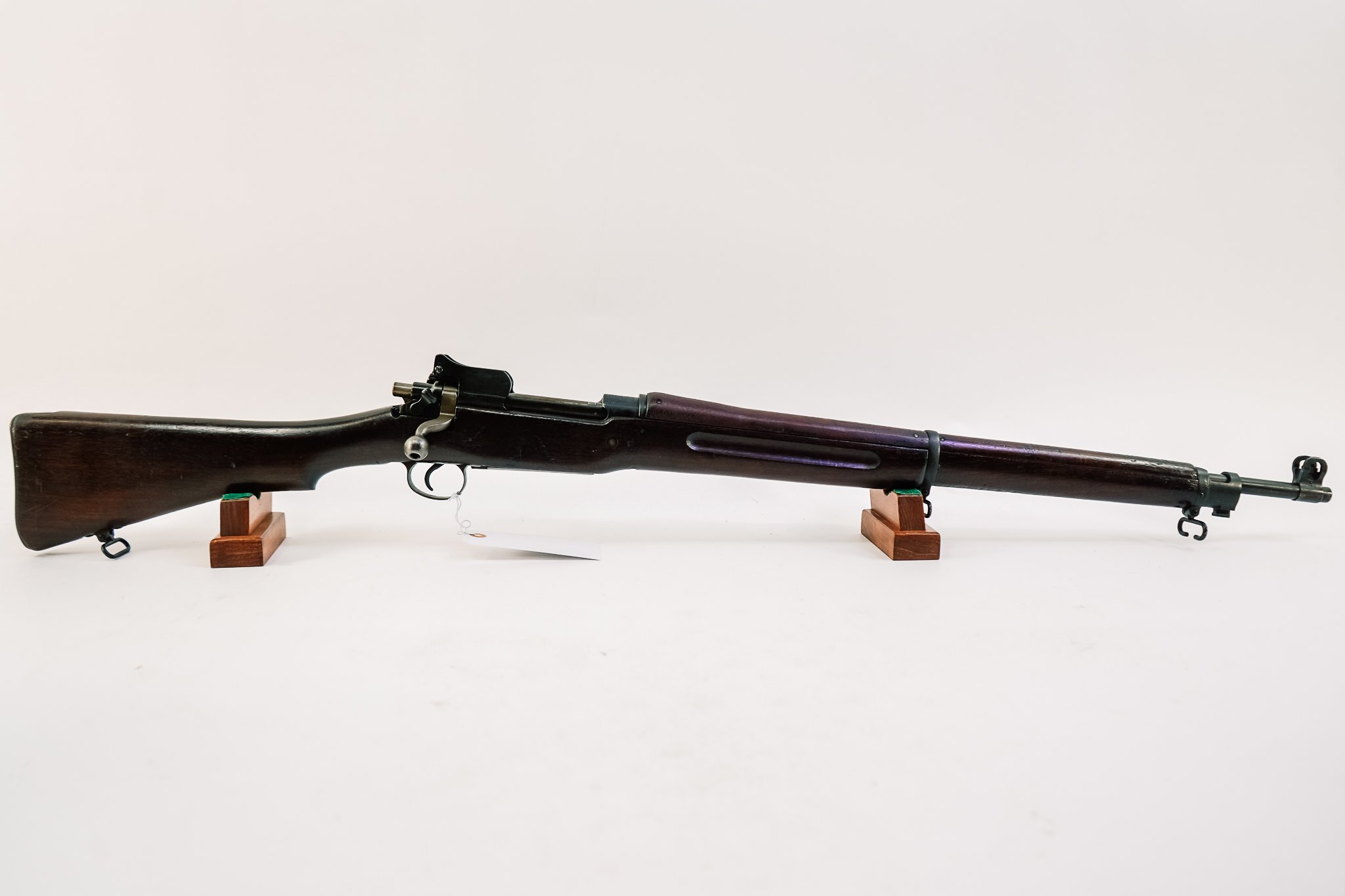
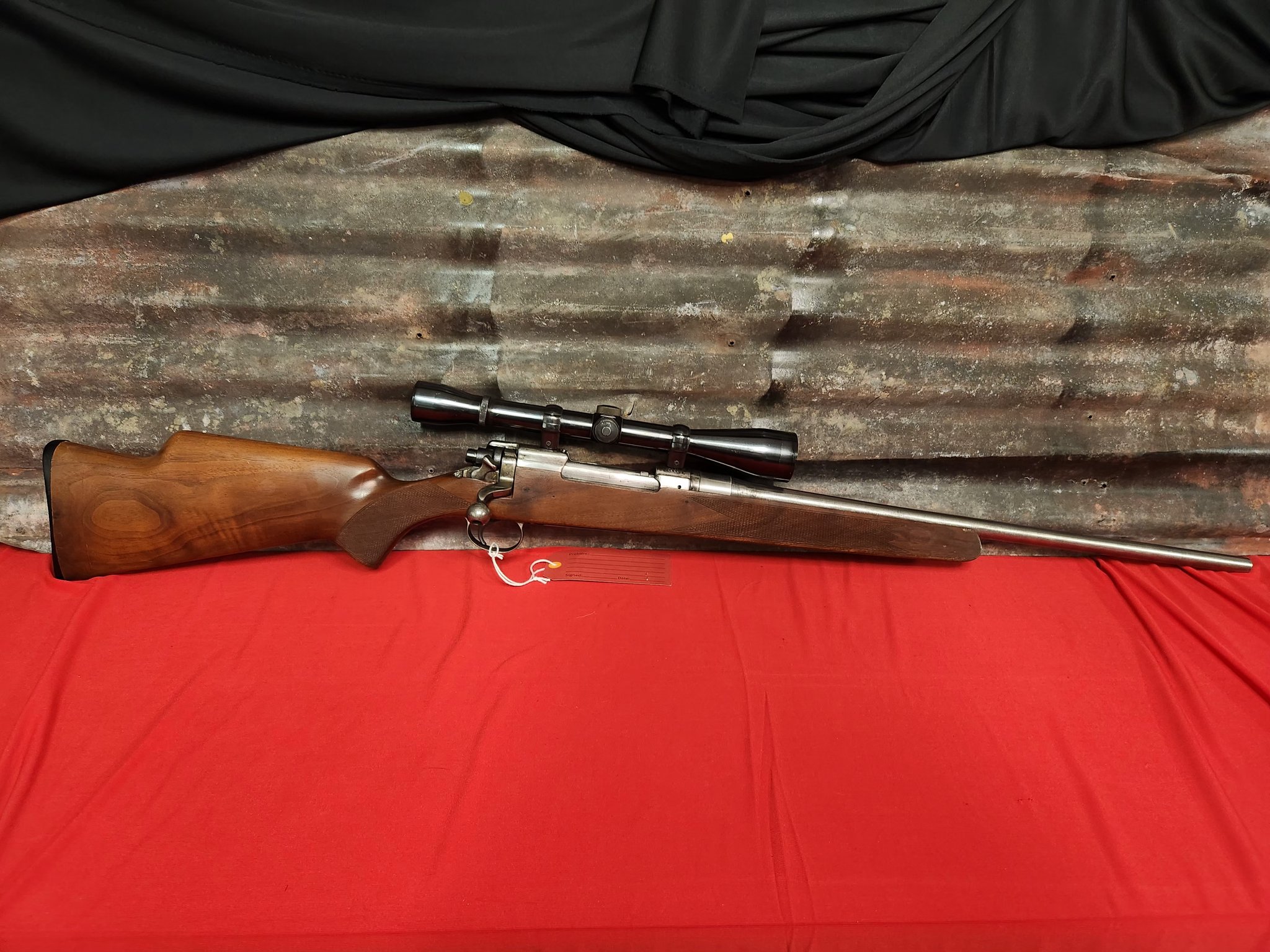
The US Rifle, Model of 1917 came from the British Pattern 14, redesigned in .30-06 when the US entered the First World War and needed rifles faster than Springfield and Rock Island could make 1903s. Winchester, Remington and Eddystone, a Remington plant in Pennsylvania, made it, and more American soldiers carried the M1917 in France than the 1903. It has a Mauser-type front-locking action, not a Lee rear-locking bolt, with distinctive sight ears on the receiver. Eddystone rifles are the most common. Many became sporters, and the action is a popular base for custom rifles.
What to check before you buy
- Marks. The model and maker on the receiver or wrist socket, and whether the bolt number matches the receiver; Enfield bolts were numbered and were often swapped.
- Bolt head. Lee-Enfield headspace is set by interchangeable bolt heads of different lengths. Have a gunsmith check headspace on any rifle before you fire it.
- Bore. Many Enfield barrels are worn or pitted from cordite and corrosive primers; look at the muzzle and the throat.
- Stock. The two-piece Lee-Enfield stock should fit closely. Cut-down sporter stocks lower collector value.
- Import marks. Explained in our condition guide.
Ammunition
.303 British is still made by several companies with modern non-corrosive primers. Old military .303, much of it Berdan primed and corrosive, needs prompt cleaning. M1917s fire .30-06, like the 1903 and the Garand. See the ammunition guide.
Common questions
What does the star after Mk I mean?
A star after a mark number, such as No. 4 Mk I*, means a modified version of that mark, usually simplified for faster wartime production. The Savage and Long Branch rifles include many Mk I* rifles, with a simpler bolt release than the standard Mk I.
Are .303 rifles good for deer?
With expanding hunting ammunition, .303 British is legal for deer in most rifle states and was used for big game across the Commonwealth for decades. Check the state rules on the city pages.
Are Enfield magazines interchangeable?
Not always. Magazines differ between the SMLE, the No. 4 and the Ishapore 7.62 rifles, and fit can vary even within a model. Each magazine was fitted to its rifle in service. Buy the magazine for your exact model and check its fit and feed.
How do I tell a Lee-Enfield from an M1917 at a glance?
The Lee-Enfield has a two-piece stock and a detachable box magazine below the action, and its bolt locks at the rear. The M1917 has a one-piece stock, a fixed internal magazine and big protective ears around its rear sight.
C&R status
Military Lee-Enfields and M1917s made 50 or more years ago qualify as curios or relics under the federal definition. See the C&R license guide and the Mauser guide for the rifle the Enfield fought against. Every Enfield in the Enfield shelf ships to the dealer you choose.
General information, not legal advice. Current as of October 2026. Laws change; check the official source before you act.