1903 and 1903A3 Springfield: a buyer's guide
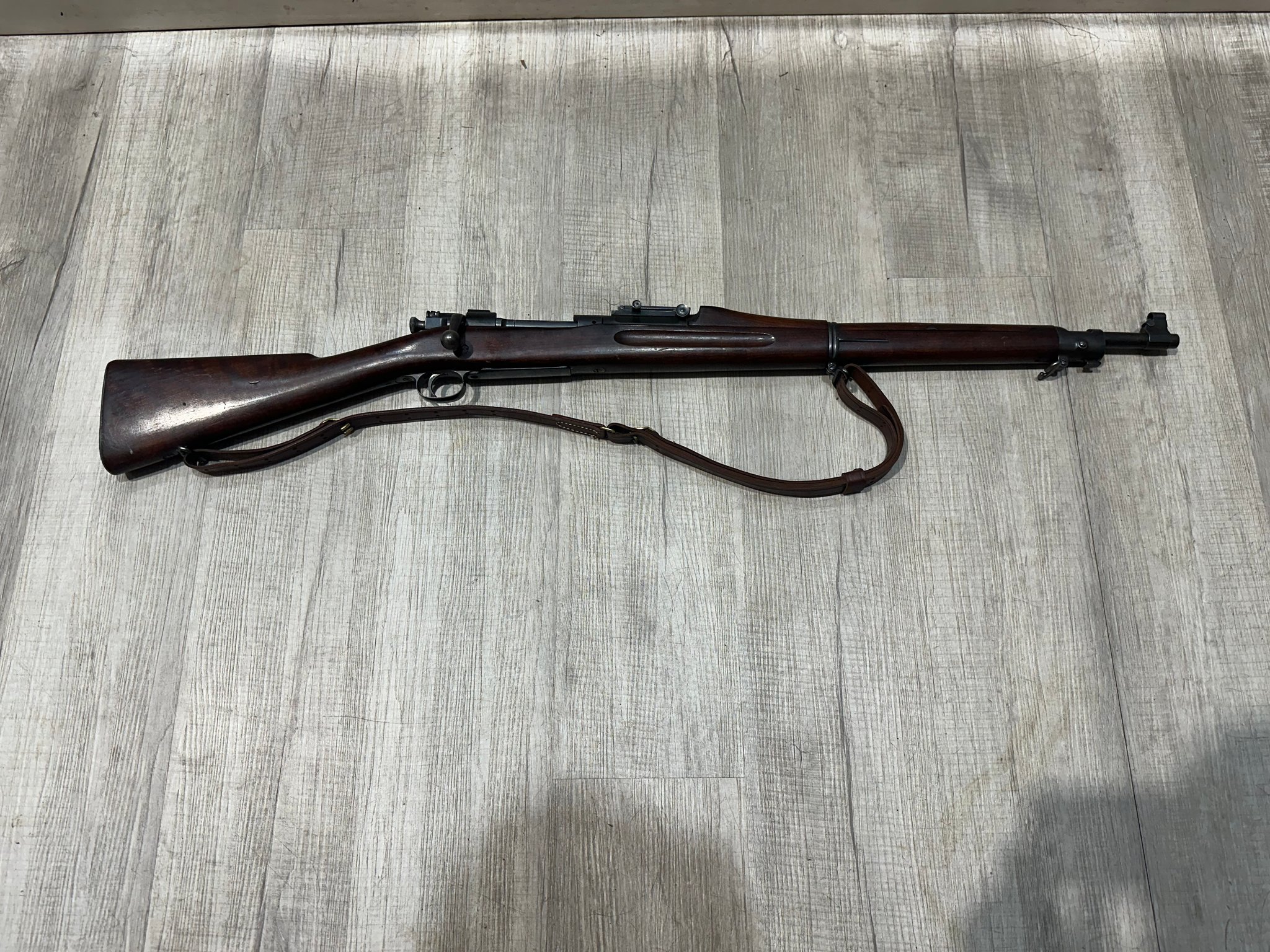
The US Rifle, Caliber .30, Model of 1903 was the American service rifle from 1903 until the M1 Garand replaced it, and it stayed in service through the Second World War as a sniper, grenade-launching and training rifle. Collectors split the family into the original 1903, the wartime 1903 made by Remington, and the simplified 1903A3. They feel the same on the shoulder but differ in value, parts and history. This guide covers what to look for before you buy one, from a full military rifle to a sporter or a single receiver.
The 1903: Springfield Armory and Rock Island
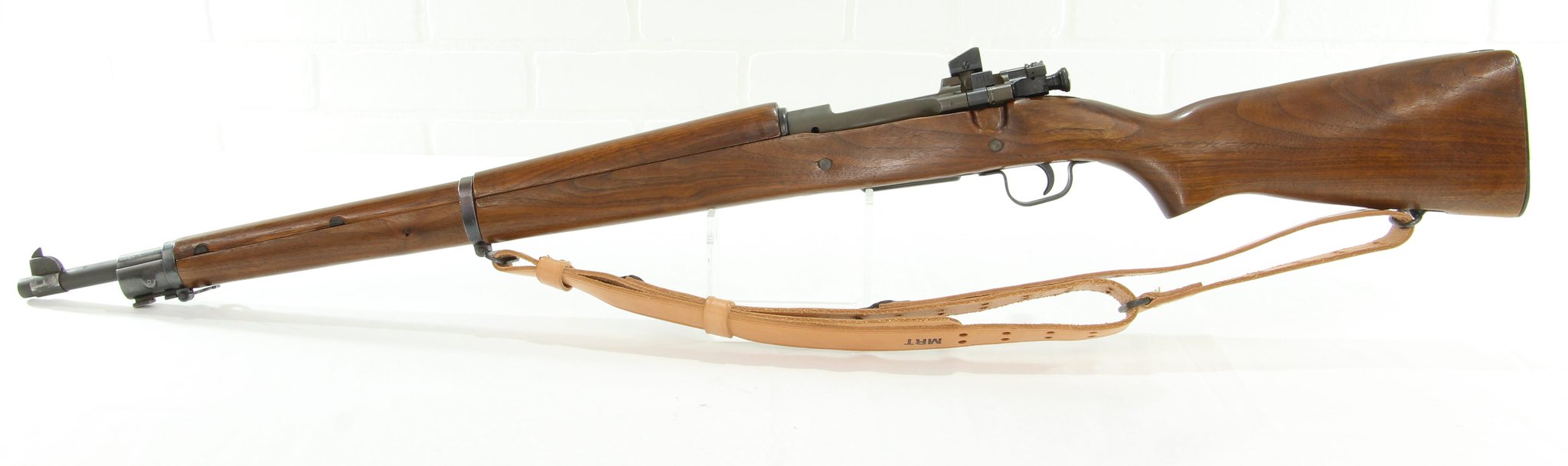
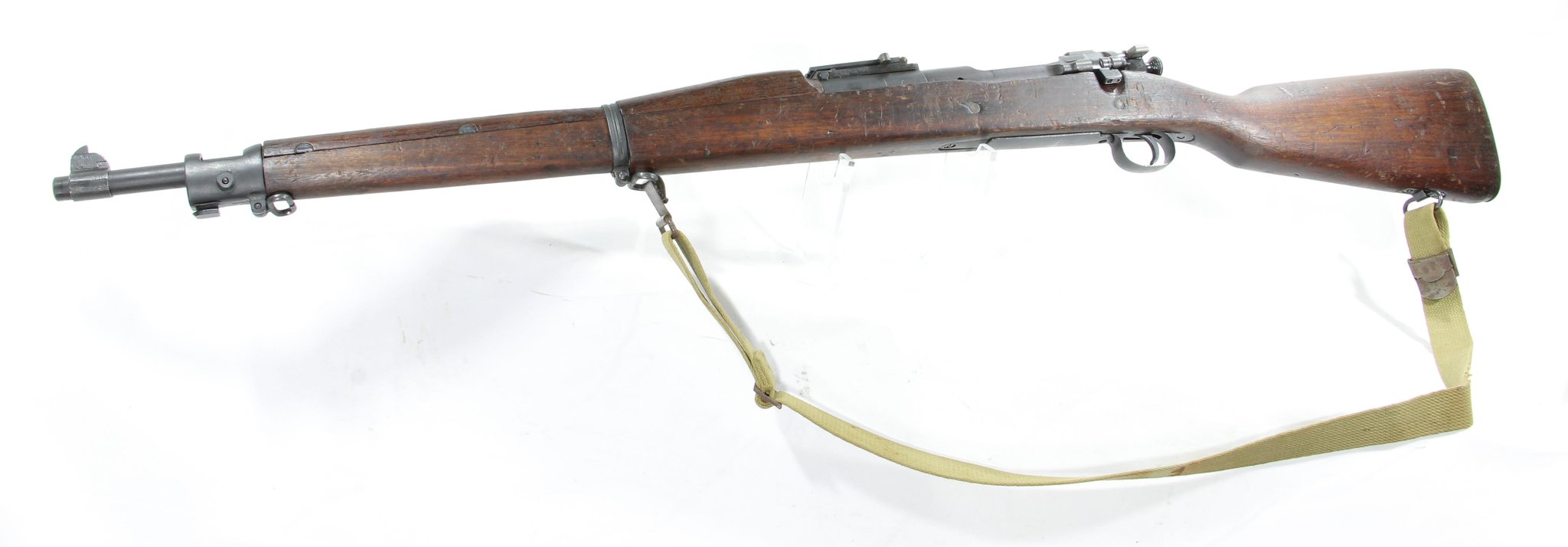
The first rifles were made at Springfield Armory in Massachusetts and at Rock Island Arsenal in Illinois. They were chambered for the .30-06 cartridge from 1906, which is the round still sold today. Original 1903s have a rear sight on the barrel ahead of the receiver, a straight-grip stock on most production, and milled parts throughout.
Low-number receivers
Early receivers were heat treated by a method that left some of them brittle, and a number failed in service. The Army changed the process during the First World War. As a working rule collectors treat Springfield receivers below about serial 800,000 and Rock Island receivers below about 285,000 as low-number rifles, and many recommend not firing them at all. Treat that number as a guide, not a guarantee: ask a gunsmith who knows the 1903 and decide on the rifle in front of you.
WWII production: Remington 1903 and 1903A3
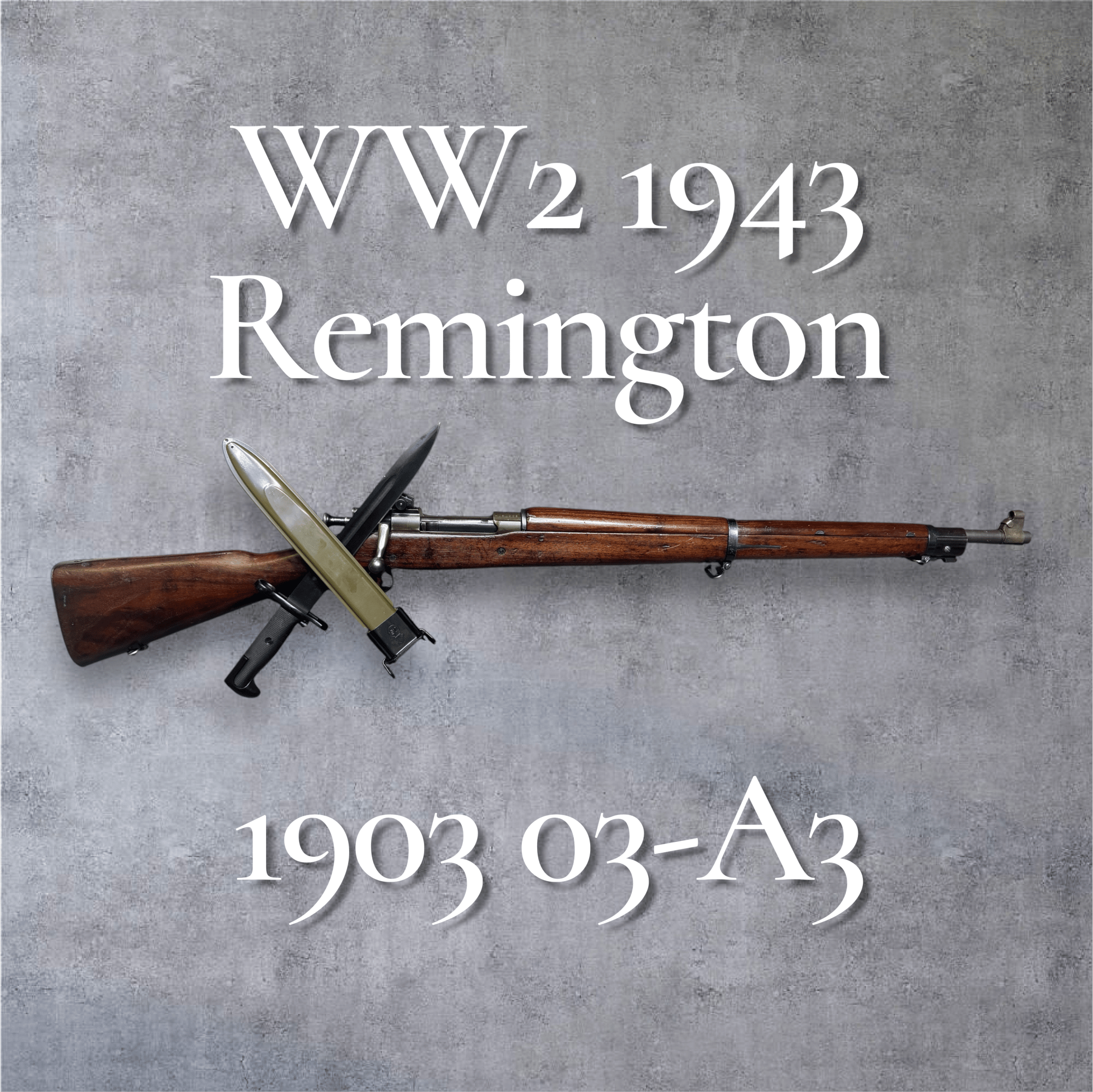
In 1941 Remington took over the old Rock Island tooling and began making 1903s, first close to the original pattern and then with simplified parts, which collectors call the Remington 1903 Modified. In 1942 the Army adopted the 1903A3, built by Remington and by Smith-Corona, the typewriter maker. Its main changes were:
- A rear aperture sight mounted on the receiver bridge, easier to use than the barrel sight.
- Stamped sheet-metal parts for the trigger guard, barrel bands and butt plate.
- Barrels with two or four grooves instead of four; a two-groove barrel is original to many 03A3s and shoots well.
- Usually a straight-grip stock, though scant-grip and later replacement stocks are common.
The receiver ring stamp tells you the maker: U.S. REMINGTON MODEL 03-A3 or SMITH-CORONA MODEL 03-A3, with the serial number. A 1903A4 is the sniper version, with no iron sights and a scope base; original A4s are scarce and reproductions exist, so ask for provenance.
Rebuilds, sporters and mixed-maker rifles
Most 1903s and 1903A3s went through an arsenal rebuild at some point, and rebuilds mixed parts freely. A rifle with a Remington receiver and a Springfield bolt is not necessarily wrong; what matters is whether the parts are correct for a rebuild and whether the seller describes it honestly. Look at:
- Barrel date. Most barrels carry a maker's initial and a month and year at the muzzle. A barrel much later than the receiver usually means a rebuild.
- Stock cartouches. Inspector stamps on the stock and a firing proof behind the trigger guard. Sanded-off or recut cartouches lower collector value.
- Bolt. 03A3 bolts are often parkerized with a stamped or simplified knob; original bolts are marked with the maker's initial on many runs.
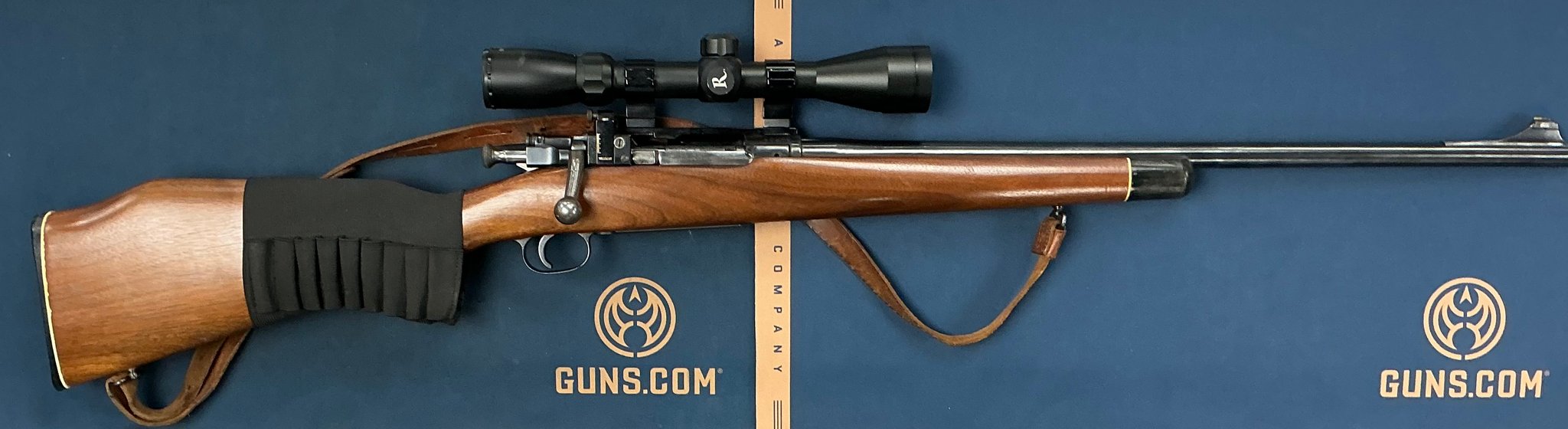
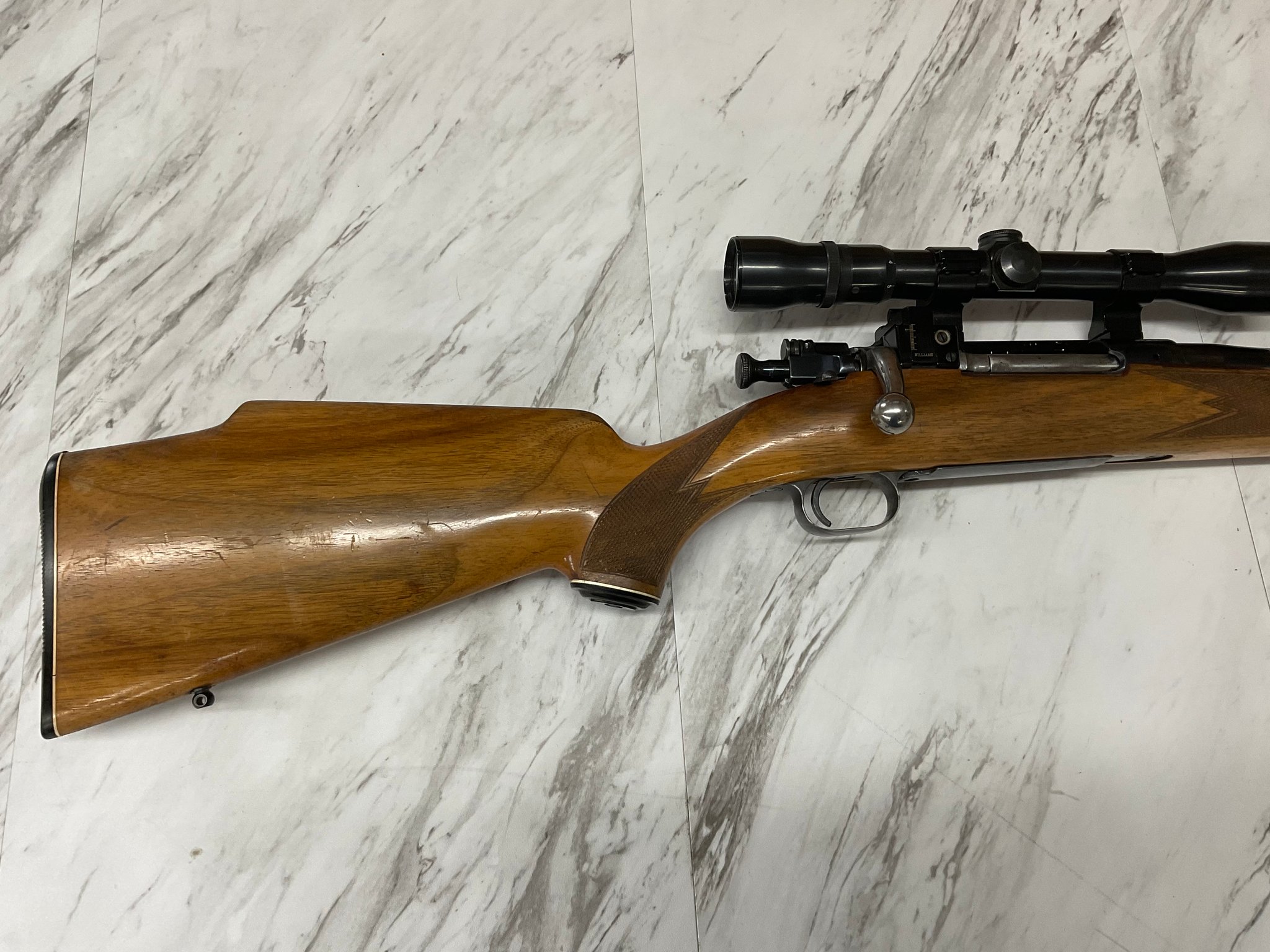
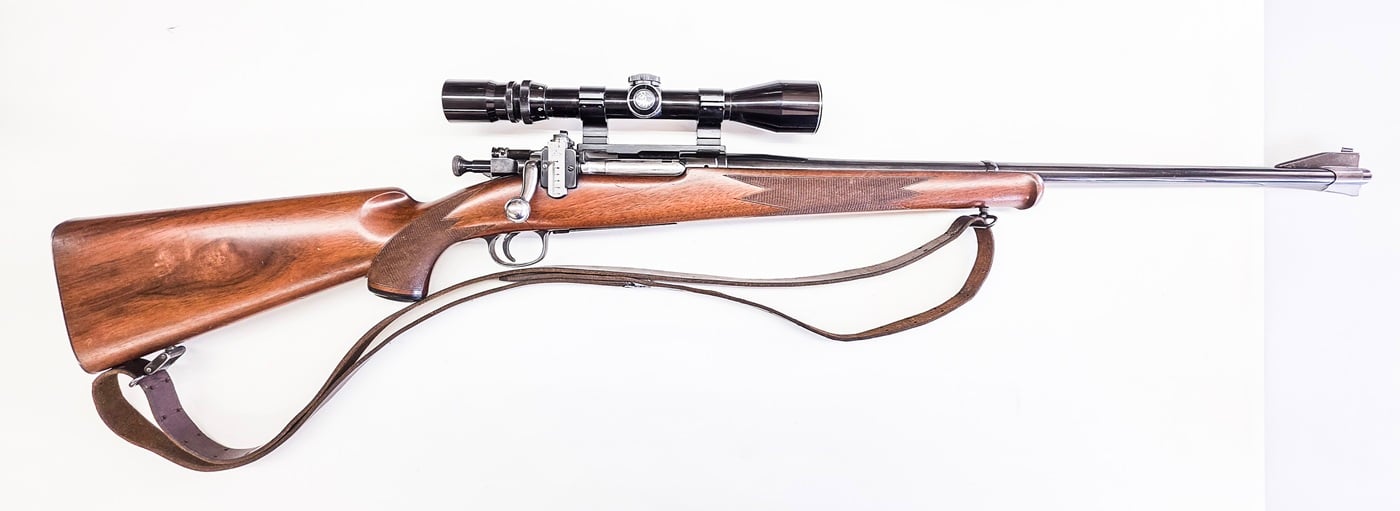
Sporters are a separate market. Thousands of 1903s were cut down after the war into hunting rifles, with a new stock, a bent bolt and a scope. A good sporter can be a fine deer rifle in .30-06, and it costs far less than a correct military rifle. It will not return to collector value if you rebuild it with military parts, but it can be a sound shooter.
Buying a receiver or a build
A stripped 1903 or 1903A3 receiver is legally the firearm, so it ships to your FFL like a complete rifle. Whether it counts as a curio or relic depends on when it was made: an original wartime receiver qualifies under the 50-year rule, while a receiver of new manufacture does not, even if it follows the 03A3 pattern exactly. Ask which you are buying before you order, and see our C&R license guide for what that changes. Have a gunsmith set and check headspace on any rifle you assemble.
What to check before you buy
- Serial number and maker on the receiver ring, and whether the rifle is a low-number Springfield or Rock Island.
- Bore and muzzle. Look for pitting and wear at the crown; military cleaning rods wore many muzzles.
- Headspace. Checked with gauges by a gunsmith before firing.
- Import marks. Rifles that came back from foreign service carry an importer's stamp; US-retained rifles do not. Our condition guide explains why that matters.
- Stock. Cracks behind the recoil lug and at the wrist are the usual faults.
Ammunition
The 1903 and 1903A3 fire .30-06 Springfield. Modern commercial .30-06 is fine in a sound rifle; the M2 ball load with a 150-grain bullet is the classic match for its sights. Old US surplus from before the 1950s may have corrosive primers, so clean the bore with a water-based solvent after shooting it. Our surplus ammunition guide covers the details.
Common questions
Is a 1903A3 a good shooter?
A sound 1903A3 with a good barrel is an accurate rifle, and its receiver aperture sight is easier for most people to use well than the barrel-mounted sight of the original 1903. Two-groove barrels shoot as well as four-groove barrels when they are in good condition. Have headspace checked first, and start with ammunition close to the M2 ball load the sights were set for.
What is the difference between a 1903 Mark I and a standard 1903?
A Mark I rifle was made at Springfield Armory near the end of the First World War with a small ejection port cut into the left side of the receiver and some modified parts, for a device that was never issued in quantity. Most Mark I rifles were later fitted with standard parts, but the receiver cut remains and collectors pay for it.
Should I restore a sporter to military configuration?
It can make a rifle look right, but it will not have the value of an original military rifle, and correct parts are not cheap. Many collectors leave a well-made sporter as it is and hunt with it.
Related rifles
The 1903's successor is the M1 Garand, and its First World War partner was the M1917 Enfield, covered in the Enfield guide. All of our 1903 and 1903A3 listings are in the 1903 shelf; each one ships to the dealer you choose.
General information, not legal advice. Current as of October 2026. Laws change; check the official source before you act.