Mauser rifles: a buyer's guide to the K98k and its cousins
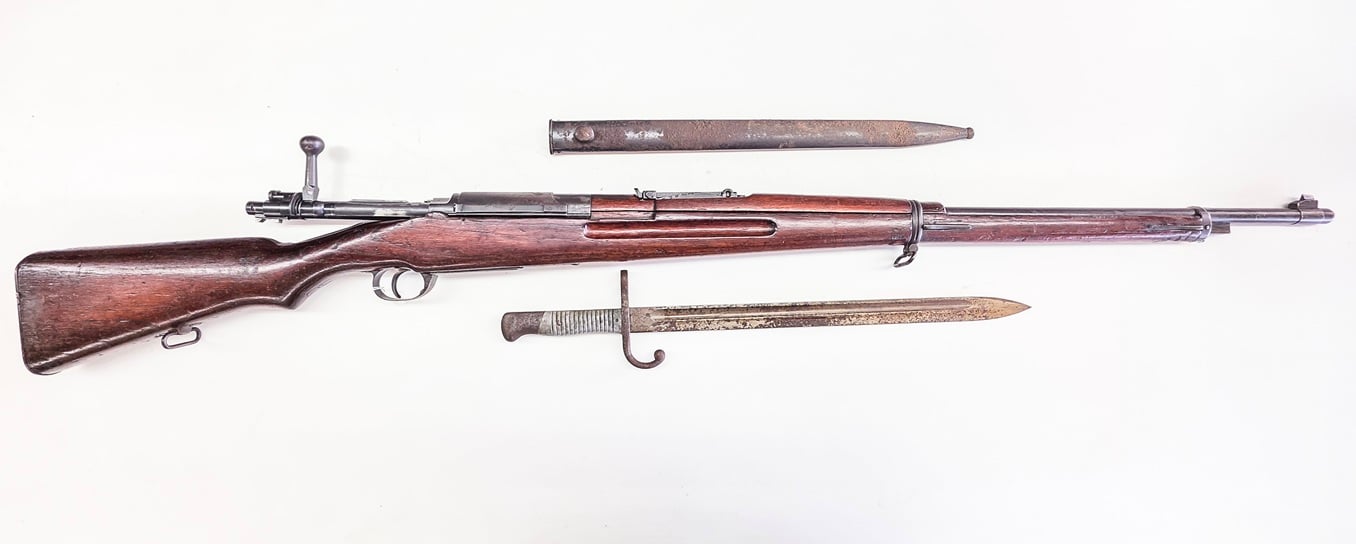
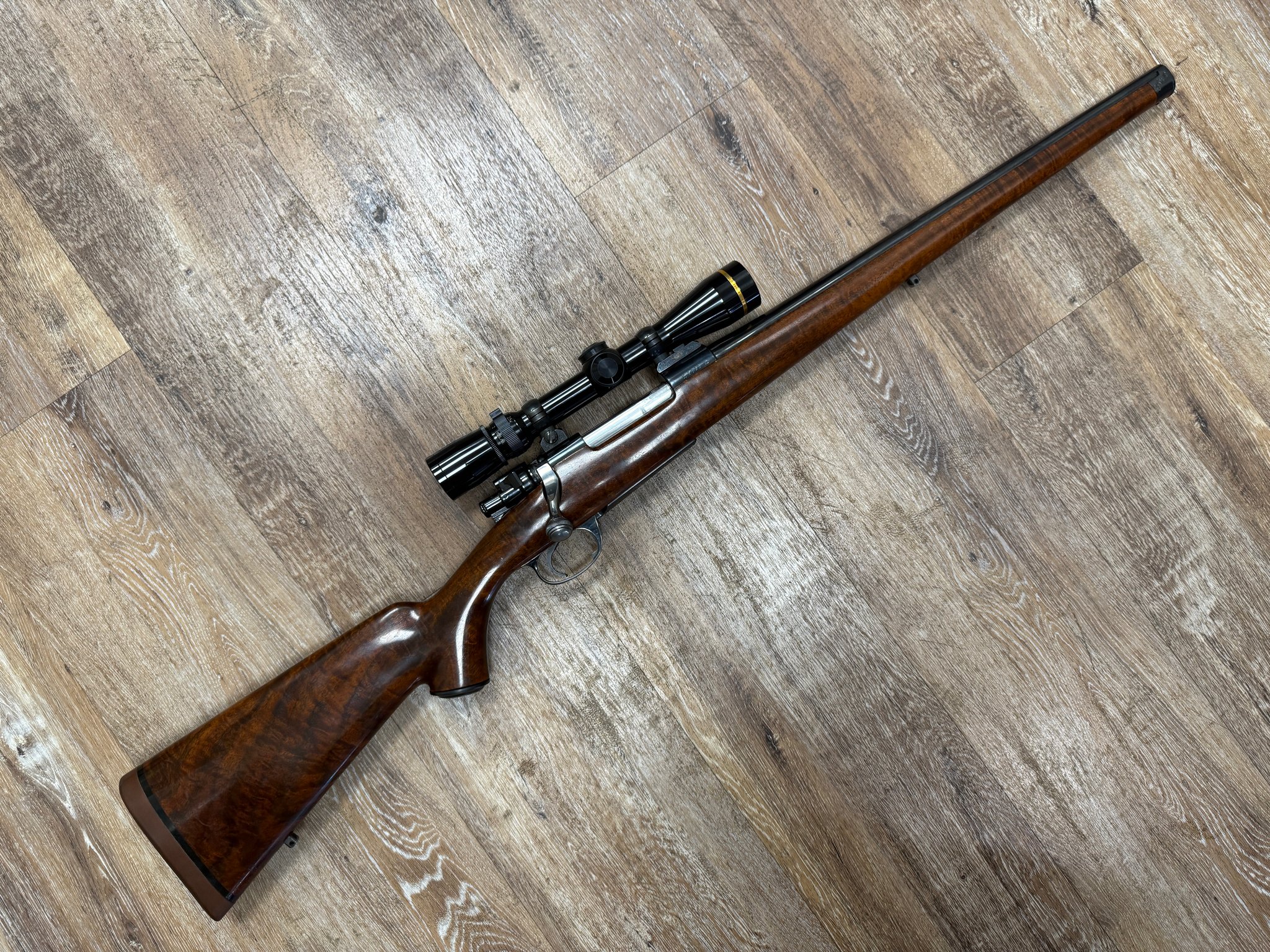
The Mauser bolt action is the most copied rifle design in history. Paul Mauser's turn-bolt rifles armed Germany, Sweden, Turkey, Yugoslavia, Argentina, Chile, Spain, Czechoslovakia, Persia and many more countries, and the Model 98 action became the basis of the modern hunting rifle. For a collector the result is a huge family of rifles that share an idea but differ in caliber, markings and value. This guide sorts the main patterns and tells you what to check before you buy.
Germany: Gewehr 98 and Karabiner 98k
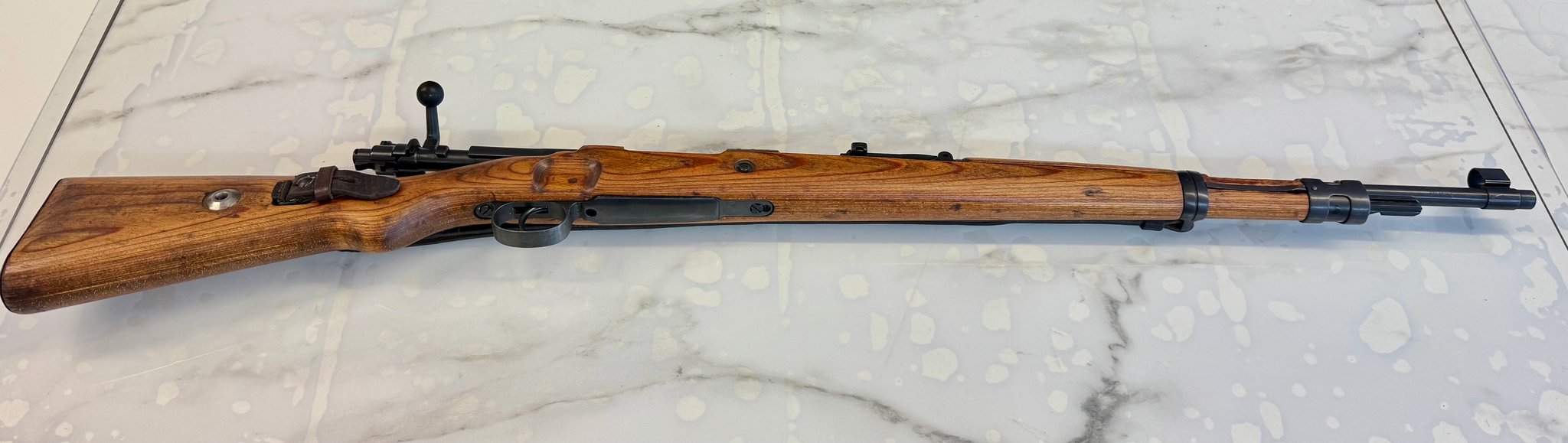
The Gewehr 98 was the German infantry rifle of the First World War, a long rifle with a distinctive rollercoaster rear sight on early production. The Karabiner 98k, adopted in 1935, was the standard German rifle of the Second World War. Both are chambered for 8x57mm, the cartridge sold today as 8mm Mauser.
- Maker and year codes. Wartime K98k receivers carry a factory code instead of a name, such as numbers or letter codes for Mauser Oberndorf and other plants, and a year.
- Waffenamt marks. Small eagle-over-number inspection stamps (WaA) on the receiver, barrel, bolt and stock.
- Matching numbers. German rifles were serialized on many parts. All matching, including the bolt, is what collectors pay most for.
- Capture and rework. Many K98ks were captured and reissued, by the Soviet Union among others. Soviet capture rifles were refinished and often have mismatched or electro-penciled numbers, and they sell well below an original rifle.
Sweden: m/96 and m/38
Swedish Mausers were made by Carl Gustafs Stads Gevärsfaktori and Husqvarna, and early ones in Germany. The long m/96 and the shorter m/38 are chambered for 6.5x55mm Swedish, a mild and accurate cartridge still loaded for hunting. Many carry a brass disc in the stock showing bore condition, and Swedish rifles are known for good bores because they saw little combat.
Turkey
Turkey bought Mausers from Germany and also made and reworked rifles at Ankara and Kirikkale; many earlier rifles were reworked to a 1938 pattern. Most are 8mm Mauser, and older rifles should be checked to confirm the chambering, since some early ones were built for a different cartridge. Turkish Mausers are among the least expensive Mausers to buy, and condition varies widely.
Yugoslavia: M24/47 and M48
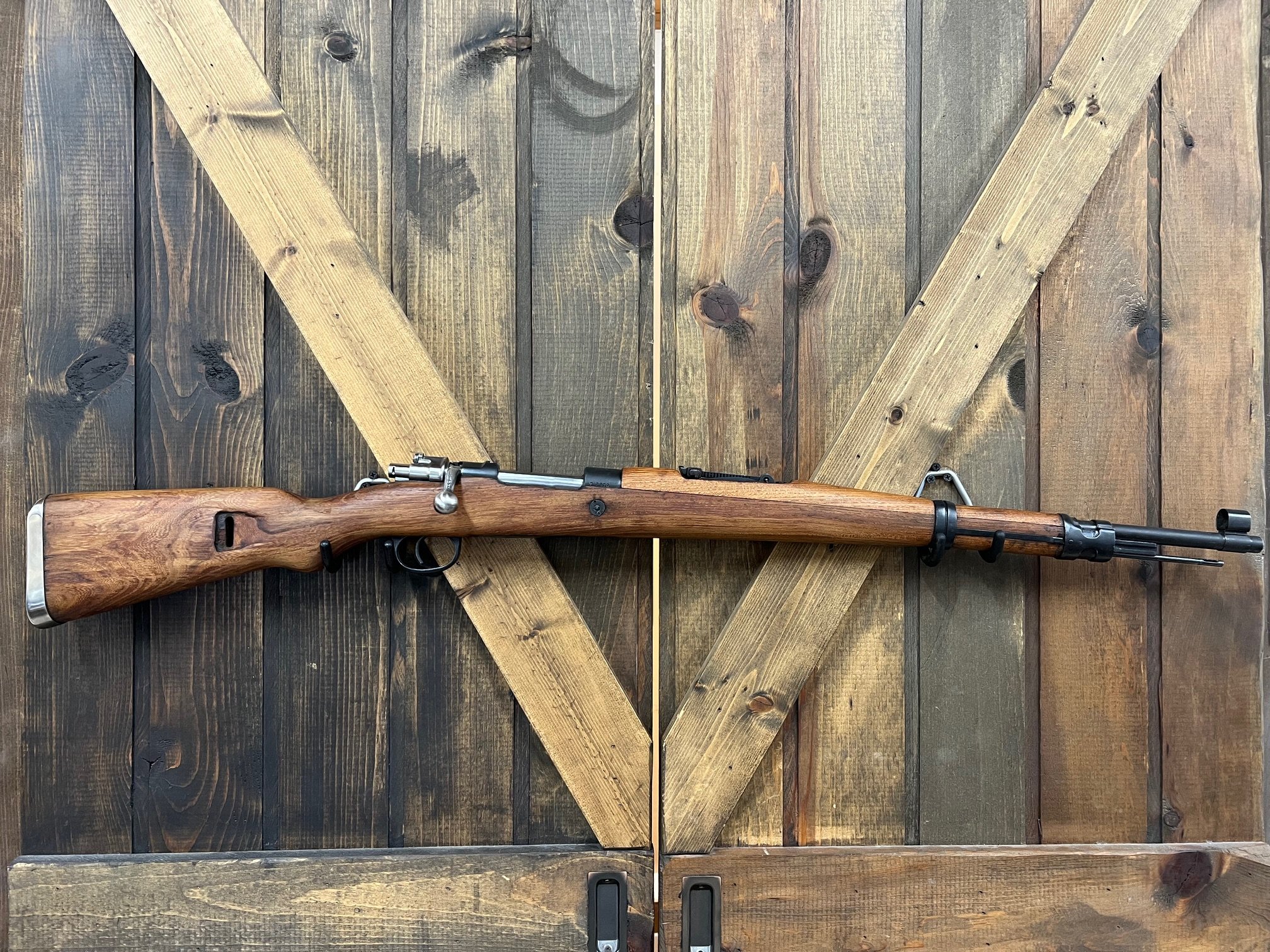
Yugoslav rifles came from the Kragujevac arsenal, later Zastava. The M24/47 is a reworked earlier rifle; the M48 and M48A are a post-war design with an intermediate-length action that looks much like a K98k. All are 8mm Mauser. Many M48s were stored for decades and came to the US in very good condition, often still in heavy preservative grease.
South America and Spain
- Argentina. The Model 1891 and Model 1909, many made by DWM in Berlin, in 7.65x53mm Argentine. Many have the national crest ground off, which collectors note. The 1909 is a Model 98 action and a well-regarded rifle.
- Chile. The Model 1895 in 7x57mm, many made by Ludwig Loewe in Berlin.
- Spain. The Model 1893 and 1916 short rifles in 7x57mm, made at Oviedo and elsewhere, and later conversions. Spanish small-ring actions are not as strong as the 98; do not rebarrel them to hotter cartridges.
Czechoslovakia and others
The Czech vz. 24, made in Brno, was a successful 98-pattern rifle sold to many countries, and Brno also built rifles such as the Persian 98/29. Belgium (FN), Siam, Brazil and others round out the family. Most are 8mm or local cartridges; confirm the chambering on every rifle.
Small ring, large ring, and the 8mm bore
Mausers fall into small-ring actions such as the 1893, 1895 and Swedish m/96, and large-ring Model 98 actions. The 98 has the larger receiver ring and the third safety lug. For ammunition, 8mm Mauser is today a .323-inch bullet, the S-bore. A few very early German rifles, such as the Gewehr 88, were made for the older .318-inch bullet. Never fire modern 8mm ammunition in a rifle until you know its bore; a gunsmith can slug it. Our ammunition guide lists each cartridge.
What to check before you buy
- Crest, maker and year on the receiver ring, and whether the crest is intact.
- Matching serial numbers on bolt, receiver, barrel and stock, and whether any are electro-penciled.
- Bore condition and the muzzle crown.
- Importer marks, which tell you the rifle came in from foreign service after 1968; see the condition guide.
- Headspace, checked by a gunsmith before firing.
Modern Mauser-brand rifles
The Mauser name is used today on new commercial hunting rifles and on rimfire rifles styled after wartime designs. These are new firearms, not curios or relics, and they ship to a dealer like any new rifle. See the C&R license guide.
Common questions
Which Mauser is the best shooter for the money?
Swedish m/96 and m/38 rifles have a reputation for good bores and gentle recoil, and Yugoslav M48s are often in very good condition. Turkish rifles are usually the cheapest. A truly original German K98k is a collector's rifle first and costs much more.
How do I clean off preservative grease?
Rifles stored for decades in heavy grease need a full strip and cleaning, including the stock, which can hold grease in the wood. Mineral spirits on the metal and gentle heat on the stock are common methods; take your time and do not soak the wood.
Can I hunt with an 8mm Mauser?
Yes, in most states where rifles are legal for deer, with expanding hunting ammunition. Many hunters use surplus Mausers for deer and black bear. Read the state rules on the city pages.
Related rifles
The Mauser's main rivals were the Mosin-Nagant, the Lee-Enfield and the 1903 Springfield, which borrowed enough of the Mauser design that the US paid Mauser royalties. Every Mauser in the Mauser shelf ships to the dealer you choose.
General information, not legal advice. Current as of October 2026. Laws change; check the official source before you act.